Choosing the right T-shirt fabric is an important decision for every clothing brand. Fabric affects how a garment feels, fits, looks, washes, and performs in daily use. It also influences the product’s price, target market, season, and overall brand positioning.
Whether you are developing a basic T-shirt, an oversized streetwear style, a fitted top, or a promotional garment, the best fabric depends on more than composition alone. You should also consider fabric weight, knit construction, finishing, color, shrinkage, and the intended use of the product.
This guide explains the main factors to consider when selecting T-shirt fabric for your brand.
1. Start with the Purpose of the T-Shirt
Before comparing fabric options, define how the T-shirt will be used and who will wear it.
Ask yourself:
- Is it an everyday basic or a premium fashion product?
- Is the fit regular, fitted, boxy, cropped, or oversized?
- Will it be worn in warm weather or layered in colder seasons?
- Is it intended for retail, wholesale, uniforms, events, or promotional use?
- Does the design require screen printing, embroidery, or other decoration?
A lightweight fabric may be suitable for a breathable summer T-shirt, while a heavier fabric may be better for an oversized style that needs more structure. A fitted garment may require a softer fabric with suitable stretch and recovery.
The product purpose should guide the fabric decision before you focus on price.
2. Compare the Main Fabric Compositions
Cotton
Cotton is widely used for T-shirts because it offers a natural hand feel and comfortable everyday wear. It can be suitable for basic collections, casualwear, and many different fits.
When selecting cotton fabric, ask about the fiber quality, yarn construction, finishing, and expected shrinkage. Cotton fabric can have different levels of softness, surface appearance, weight, and durability.
Combed Cotton
Combed cotton is processed to remove shorter fibers and impurities before spinning. It is often selected for garments that require a smoother and more refined surface.
It can be a suitable option for premium basics, branded T-shirts, and products where comfort and appearance are important. The final result still depends on the yarn, knitting process, finishing, and quality control.
Cotton-Polyester Blends
A cotton-polyester blend combines cotton with polyester fibers. Depending on the blend ratio, it may offer a balance of comfort, shape retention, durability, and easier care.
Blended fabric can be useful for workwear, promotional garments, active casualwear, or products that need improved resistance to wrinkling and repeated washing. Confirm the exact blend ratio before production because different ratios create different performance and hand-feel results.
Polyester
Polyester is commonly used when quick drying, durability, and performance are important. It may be suitable for sportswear, promotional products, or garments that require specific functional properties.
Polyester can have a different hand feel and appearance from cotton. If you are considering polyester for your T-shirt, request a sample and test comfort, breathability, color, print performance, and washing behavior.
3. Understand GSM and Fabric Weight
GSM means grams per square meter. It is commonly used to describe fabric weight, but GSM alone does not determine whether a fabric is high quality or suitable for a specific product.
Fabric weight can affect:
- Drape and structure
- Opacity
- Warmth
- Breathability
- Perceived product value
- Fit and silhouette
- Shipping weight
A lighter fabric may feel cooler and more suitable for summer products. A heavier fabric may create a more structured appearance and work well for oversized or premium streetwear styles.
However, two fabrics with the same GSM can feel different because of their fiber, yarn, knit construction, finishing, and density. Always evaluate GSM together with composition and the physical sample.
4. Consider the Knit Structure
Most T-shirts use knitted fabric rather than woven fabric. The knit structure influences stretch, surface appearance, recovery, and comfort.
Common T-shirt fabric options may include:
- Single jersey
- Rib knit for collars and cuffs
- Interlock
- Piqué for some polo-style garments
- Performance knits for active or quick-drying products
Single jersey is widely used for casual T-shirts and can provide a soft, flexible hand feel. Interlock may offer a more stable and smooth structure. Rib knit is commonly used for neckbands and other areas that require stretch.
Ask the manufacturer which knit structure is suitable for your fit, decoration, and target price.
5. Match Fabric Weight to the Desired Fit
The same pattern can look very different when made with different fabrics.
Regular-fit T-shirts
A medium-weight fabric can provide a balance of comfort, movement, coverage, and everyday usability.
Fitted T-shirts
A softer fabric with suitable stretch and recovery may help the garment follow the body more comfortably. Confirm whether the fabric is designed to maintain its shape after washing.
Boxy and oversized T-shirts
A heavier or denser fabric may help create a stronger silhouette and cleaner drape. The correct choice depends on the pattern, shoulder construction, length, and styling direction.
Cropped T-shirts
The fabric should support the intended shape without excessive twisting or loss of structure. Sample testing is important because shorter garments make fit and proportion more visible.
6. Check Shrinkage, Colorfastness, and Pilling
Before placing a bulk order, ask how the fabric performs after washing and use.
Important tests or checks may include:
- Dimensional stability and shrinkage
- Colorfastness to washing and rubbing
- Pilling resistance
- Seam appearance after washing
- Fabric twisting or skewing
- Print or embroidery performance
- Shape recovery
The required testing level depends on the product type, target market, and customer expectations. Confirm the testing method and acceptance standard with your manufacturer before production.
Do not assume that a fabric will perform as expected based only on a product name. Review the physical sample and confirm the agreed specifications in writing.
7. Consider Printing, Embroidery, and Branding
Fabric selection should match the decoration method.
For screen printing, check the surface smoothness, fabric color, print adhesion, and how the print feels after washing. For embroidery, consider fabric stability, thickness, backing, and the size of the design.
You should also review how the fabric works with:
- Heat transfer printing
- Digital printing
- Embroidery
- Woven labels
- Printed care labels
- Neck labels
- Hangtags and packaging
Send the manufacturer your artwork and specify the placement, dimensions, colors, and decoration method. A pre-production sample can help you confirm the final appearance before bulk manufacturing.
8. Balance Quality, Target Price, and Order Quantity
The most expensive fabric is not always the right choice. The correct fabric should match your target customer, product positioning, retail price, and order plan.
When comparing quotations, review:
- Fabric composition
- Fabric weight
- Yarn and knit information
- Finishing process
- Color and dyeing requirements
- Customization and branding
- Sampling cost
- Minimum order quantity
- Packaging and shipping requirements
A lower unit price may not provide the hand feel, durability, or appearance your brand needs. Compare samples and complete specifications rather than comparing price alone.
9. Request Fabric and Garment Samples
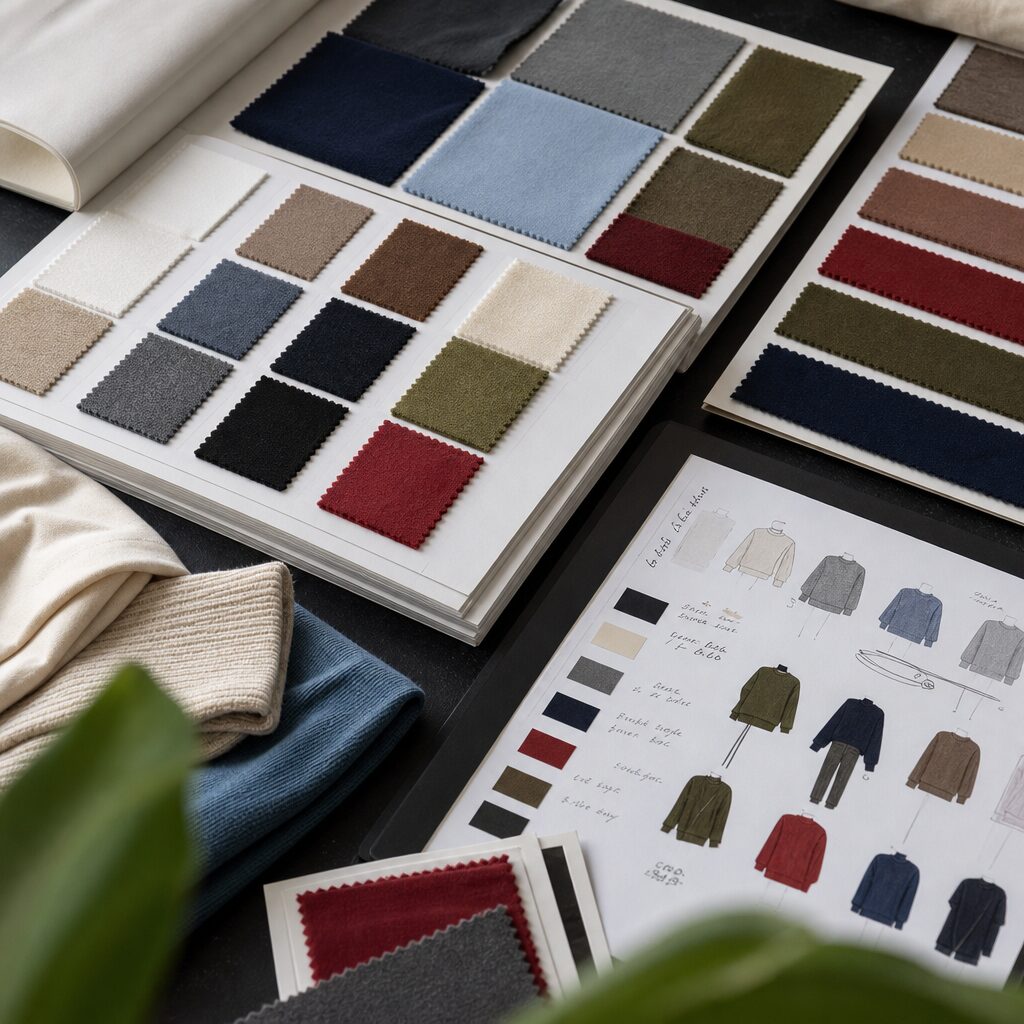
A fabric swatch is useful, but a finished garment sample gives you more information about the final product.
When reviewing a sample, check:
- Hand feel and softness
- Weight and drape
- Fit and measurements
- Neckline and collar recovery
- Stitching and seam quality
- Color under different lighting
- Shrinkage after washing
- Print, embroidery, and label placement
- Overall appearance after wearing and washing
Keep an approved sample and a written specification record for future reference. This can reduce misunderstandings during bulk production and repeat orders.
10. Questions to Ask Your T-Shirt Manufacturer
Before confirming the fabric, ask the manufacturer:
- What is the exact fiber composition?
- What is the confirmed GSM or fabric weight range?
- What knit structure is being used?
- Has the fabric been pre-shrunk or finished?
- What is the expected shrinkage after washing?
- Is the fabric suitable for my printing or embroidery method?
- Can you provide a fabric swatch and finished sample?
- Can you match a color reference or Pantone requirement?
- What is the MOQ for each fabric and color?
- Can you keep the approved fabric specification for repeat orders?
Clear answers help you compare suppliers and choose a fabric that fits your product plan.
Work with SHJ Clothing
SHJ Clothing supports clothing brands, wholesalers, retailers, e-commerce sellers, and sourcing companies with T-shirt and apparel manufacturing.
You can share your product idea, target fit, reference image, preferred fabric composition, target weight, logo artwork, estimated quantity, and delivery destination. Our team can discuss suitable fabric options, sampling, customization, and bulk production according to your requirements.
Final Thoughts
The right T-shirt fabric should match the product’s purpose, fit, season, target customer, decoration method, and price positioning. Composition and GSM are important, but they should be evaluated together with knit structure, finishing, shrinkage, colorfastness, and the finished sample.
A careful fabric selection process helps your brand create more consistent products and reduce avoidable production problems.